


The Role of Pavement Overlay in Enhancing Semi-Rigid Pavements
Key Takeaways:
- Pavement overlays reinforce structural strength by improving load distribution.
- They smooth surface irregularities to improve ride quality and reduce wear.
- They enhance safety by improving skid resistance and surface grip.
- They slow further deterioration by limiting water infiltration into the pavement.
- They increase load-bearing capacity to support heavier traffic demands.
- They address minor alignment and drainage issues to improve overall performance.
Introduction
Pavement systems are essential for ensuring that roads and highways can safely carry traffic loads over their intended service life. In Singapore, heavy traffic and continuous road use place sustained pressure on pavement performance. This directly affects safety and operational efficiency. Over time, increased traffic, environmental exposure, and material ageing lead to gradual surface deterioration.
Common issues such as cracking, rutting, and potholes reduce both structural integrity and ride quality. Left unaddressed, these defects can accelerate damage to underlying layers and increase long-term maintenance costs. In such situations, pavement overlay is widely used to restore performance without requiring full reconstruction.
In this article, we explore how an overlay enhances semi-rigid pavement systems.
What Is Pavement Overlay?
It refers to the application of a new layer of material over an existing pavement surface. This layer may consist of bituminous mixtures, concrete, or composite materials, depending on the structural requirements and traffic conditions.
Instead of replacing the entire pavement, overlay techniques focus on strengthening and improving the existing structure. This approach allows project owners to extend pavement lifespan while maintaining operational continuity, which is particularly important in high-traffic environments.
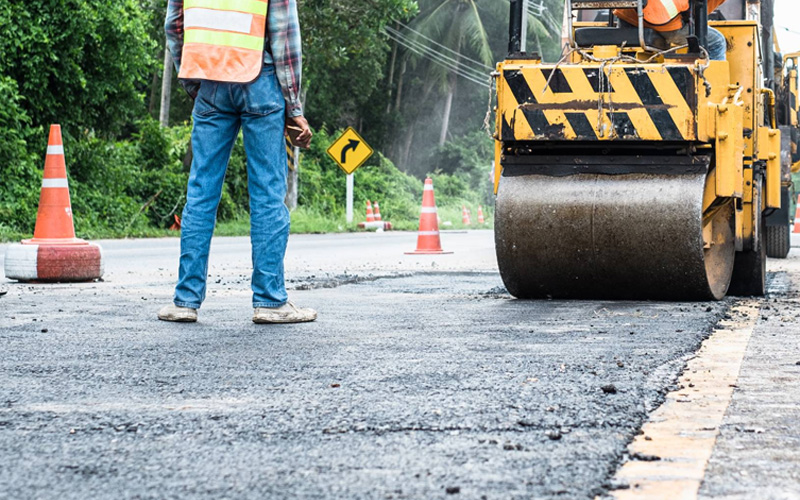
Overlay applications are commonly used alongside asphalt paving methods. During the process, the new surface layer integrates with the existing pavement to provide improved durability and ride quality.
What are the Key Benefits?
1. Restores Structural Strength
An overlay reinforces weakened pavement layers by redistributing loads more effectively. This helps restore the pavement’s ability to withstand repeated traffic stress without further degradation.
2. Improves Surface Smoothness
Surface irregularities such as cracks and ruts are corrected during overlay application. This results in a smoother ride and reduces vehicle wear, particularly for high-speed road networks.
3. Enhances Safety
Overlay surfaces improve skid resistance by providing better texture and grip. This is often relevant in wet conditions, where surface friction directly affects vehicle control.
4. Prevents Further Deterioration
By sealing cracks and limiting water infiltration, overlays protect the underlying pavement layers from additional damage. This reduces the likelihood of structural failure over time.
5. Increases Load-Bearing Capacity
Overlay systems strengthen the pavement structure. This increases its capacity to support heavier traffic loads, especially on industrial and logistics routes.
6. Corrects Minor Geometric Issues
Overlays can address minor surface alignment and drainage issues. By reducing water accumulation, they help limit a common cause of pavement deterioration in tropical climates.
What are the Types of Pavement Overlays?
The selection of overlay type depends on the extent of pavement damage, traffic conditions, and performance requirements.
1. Thin Overlays
Thin overlays are typically applied to pavements with minor surface defects. They focus on improving surface texture and sealing the pavement to prevent water penetration.
This type of overlay is often used in maintenance programmes where structural integrity remains largely intact. It provides a cost-effective solution for extending pavement life without significant structural intervention.
2. Thick Overlays
Thick overlays are used when pavements experience heavier traffic loads or more severe structural damage. These overlays are generally more than 50 mm thick and require detailed design and planning.
They provide substantial reinforcement to the existing pavement, improving its ability to handle sustained loading. In high-demand applications, such as highways and industrial access roads, thick overlays form a critical part of long-term pavement management strategies.
How Pavement Overlay Enhances Semi-Rigid Pavements
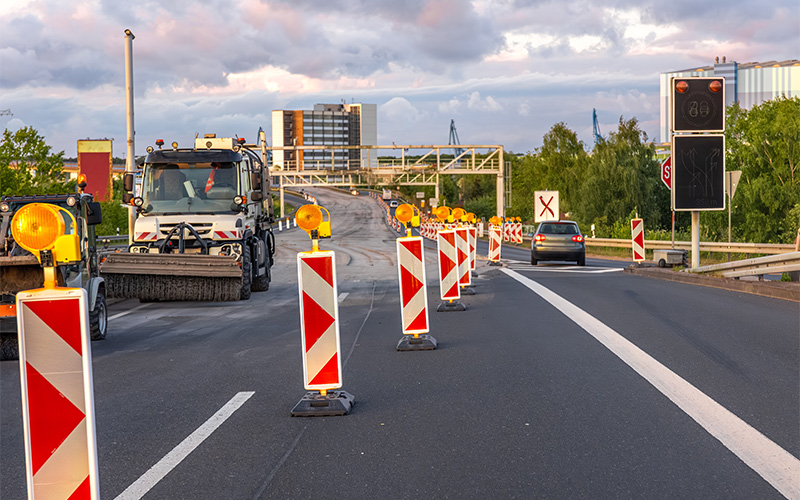
Semi-rigid pavements combine the flexibility of asphalt pavement with the strength of cement-treated base layers. This hybrid structure enhances load distribution while maintaining resistance to cracking. Overlay applications enhance these systems by integrating with both flexible and rigid components.
1. Improved Load Distribution
The overlay layer spreads traffic loads more evenly across the pavement structure. Stress concentrations are reduced, leading to more stable structural behaviour over time and lowering the risk of premature failure under repeated loading.
2. Surface Restoration
Overlays restore surface quality by filling cracks and correcting minor deformations. A smoother and more uniform surface improves ride comfort and supports consistent vehicle movement, while also helping maintain functional performance across different traffic conditions.
3. Extended Lifespan
By reinforcing the existing structure and preventing further deterioration, overlays extend the service life of semi-rigid pavements. This reduces the need for frequent repairs and lowers lifecycle costs.
Why Choose Semi-Rigid Pavements with Overlays?
1. Durability and Performance
Semi-rigid pavements offer a balance between strength and flexibility. When combined with overlay applications, they can withstand heavy loads while maintaining surface integrity over time.
2. Cost-Effectiveness
Compared to full reconstruction, overlays provide a more economical solution. It maximises the use of existing infrastructure while delivering measurable performance improvements.
3. Adaptability to Local Conditions
In Singapore’s climate, where rainfall and temperature variations can affect pavement performance, semi-rigid systems with overlays provide reliable adaptability. They accommodate environmental stresses while maintaining structural stability.
Semi-Rigid Pavement and Overlay Process
Material selection begins with an assessment of subgrade conditions, traffic demands, and drainage requirements. Suitable aggregates and binders are chosen to ensure long-term performance. A cement-stabilised base is then constructed with controlled mixing and compaction to achieve the required structural strength.
Following this, overlay application is carried out using carefully applied bonding layers to ensure proper adhesion between surfaces. Through this process, overlay systems are integrated with precision, resulting in a stable and durable structure.
Supporting Pavement Overlay and Semi-Rigid Systems
An overlay plays a part in maintaining and enhancing road performance, particularly in semi-rigid pavement systems. By restoring structural strength, improving surface quality, and extending service life, it offers a practical solution for managing pavement deterioration without full reconstruction.
For organisations planning pavement upgrades or maintenance strategies, working with an experienced road contractor in Singapore ensures that overlay solutions are properly designed and executed.
Established in 2013, United E&P is a one-stop asphalt premix producer supported by a management team with more than 30 years of experience in road and airfield construction. As a BCA-registered CR14 Asphalt Works & Road Marking and CW02 Civil Engineering contractor, we operate within Singapore’s regulatory standards while maintaining strong collaborations with industry partners, academia, and suppliers.
Get in touch to learn more about semi-rigid pavements and overlay integration.
Connect with us
If you have any questions or enquiries, feel free to reach out to our friendly team anytime; we’re here to assist you!
