


What Is Road Pavement? Structure, Materials, and Engineering Behind Modern Roads
Introduction
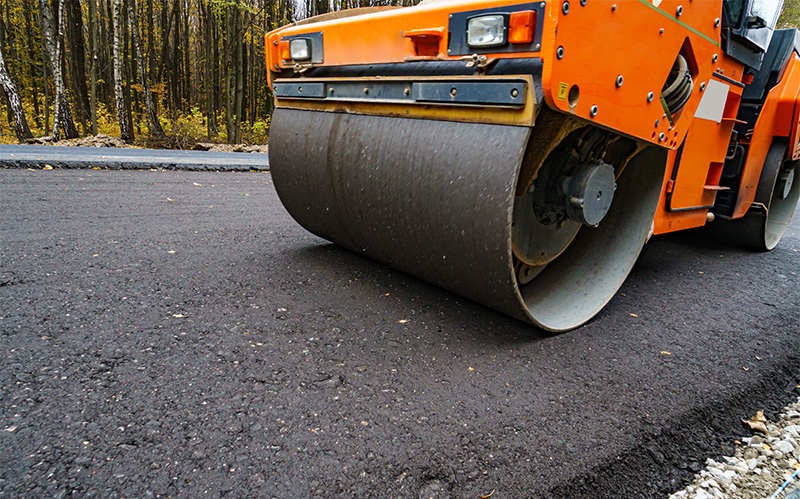
Roads are a critical part of modern infrastructure, supporting daily transportation, logistics, and economic activity. Every commute to work, delivery to a warehouse, emergency vehicle response, and bus journey across the city depends on roads that can perform reliably under constant use. At the centre of that performance is the road pavement.
Although people use paved roads every day, the engineering behind them is often overlooked. Road pavement is an engineered structural system designed not only to provide a smooth driving surface but also to distribute vehicle loads safely through multiple structural layers. Each layer has a specific role, from supporting traffic stresses to protecting the underlying soil from excessive pressure or water intrusion.
In this article, we explore what road pavement is, how it is constructed, and the key pavement engineering design principles. We also look at common pavement problems, practical maintenance approaches, and the role of professional contractors.
Key Takeaways:
- Road pavement is not just the top surface of a road. It is a complete structural system comprising several layers that work together to support traffic loads and protect the underlying ground.
- The long-term performance of a pavement depends heavily on the quality of its materials, including aggregates, binders, cement, and properly produced road construction materials suited to the project’s demands.
- Factors such as traffic volume, axle loads, soil strength, climate, drainage, and pavement design directly affect the thickness and durability of a pavement.
- Most visible pavement damage begins small. Regular inspections and timely maintenance, such as crack sealing, resurfacing, and patching, can prevent more serious, more expensive failures.
- Skilled contractors contribute to better road durability by combining engineering expertise, quality control, reliable material supply, and proper construction practices from start to finish.
Understanding Road Pavement
What Is Road Pavement?
Road pavement refers to the engineered structural system that forms the surface of transportation routes such as roads, highways, and footpaths. It is constructed as a series of layers built above the natural ground to support traffic loads while providing a stable and safe surface for vehicles and pedestrians.
Unlike a simple road surface, pavement includes both the visible surface layer and the underlying structural layers that work together as a single system. The top layer may be what road users see and interact with, but the lower layers are equally important because they systematically carry, spread, and reduce the forces transferred downward from traffic. These layers distribute traffic loads gradually to the underlying ground, preventing excessive stress on any single layer and helping the road maintain its structural stability over time.
What Roads Are Made Of
Road pavements are constructed from carefully selected construction materials that provide structural strength, flexibility, and durability under continuous traffic loads. These materials are combined and engineered to form a pavement system capable of supporting vehicles over many years of use.
1. Aggregates
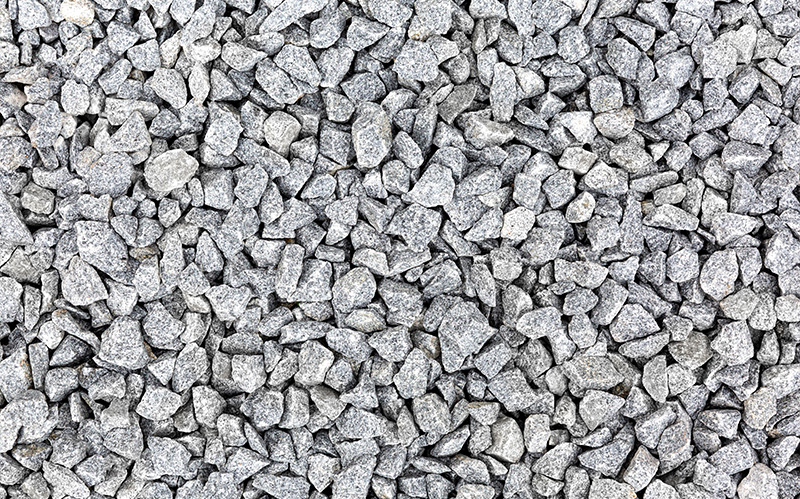
Aggregates form the main structural component of road pavements. They include crushed stone, sand, gravel, and other mineral materials. These aggregates provide the bulk strength of the pavement structure and help distribute traffic loads across the pavement layers.
The quality and gradation of aggregates are critical to pavement performance. Well-graded aggregates allow particles of different sizes to interlock tightly, creating a dense and stable structure that can withstand heavy loads and resist deformation. This interlocking effect improves strength and reduces the amount of empty space in the mix, helping lower the risk of moisture penetration and material movement under traffic.
2. Asphalt Binder
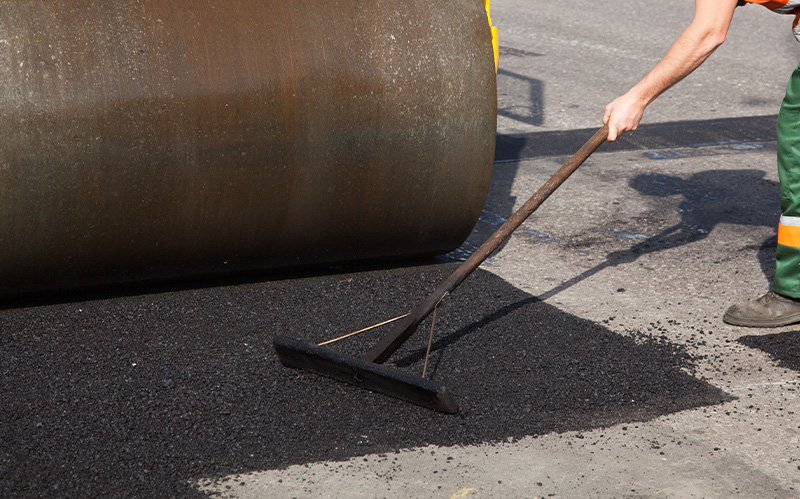
Asphalt binder acts as the adhesive that binds aggregates together to form asphalt concrete. It is derived from crude oil during the petroleum refining process. After lighter fuels such as gasoline and kerosene are extracted, the heavier residue is further processed to produce asphalt binder.
During road construction, aggregates are mixed with asphalt binder at high temperatures, typically around 150°C. The hot mixture coats the aggregate particles, allowing them to bond together and form asphalt concrete, a flexible yet durable pavement material widely used in modern road construction. This flexibility is important because it helps the pavement absorb and distribute repeated wheel loads without behaving as a brittle slab.
3. Portland Cement
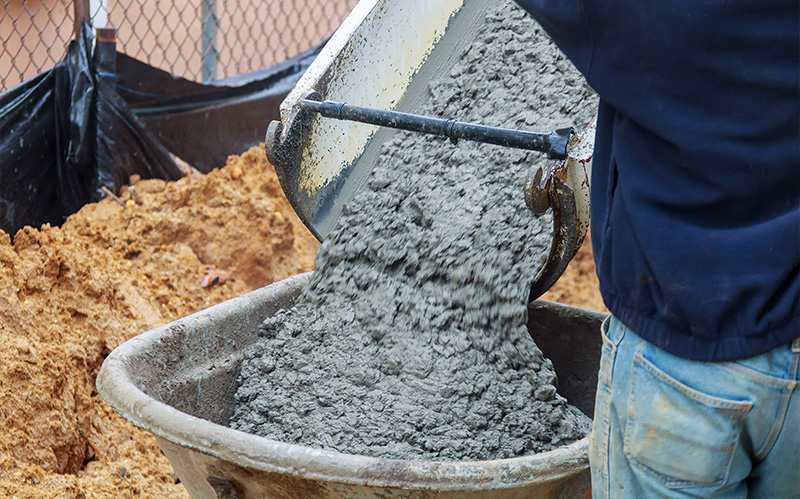
Portland cement is the primary binding material used in concrete pavements. It is produced by heating a mixture of limestone, sand, clay, silica, and alumina at high temperatures. When mixed with water and aggregates, Portland cement forms concrete, which hardens into a rigid structural material capable of carrying heavy loads.
Concrete pavements are often used in applications where higher structural stiffness is required, such as airport runways, industrial roads, and high-traffic urban corridors. As concrete spreads loads over a wider area, it can perform well under heavy and concentrated traffic. It is also valued for its durability and resistance to fuel spills in some industrial settings.
4. Asphalt Premix
Asphalt premix consists of aggregates such as crushed stone, sand, and mineral fillers that are mixed with asphalt binder to form a cohesive pavement material. The mixture is prepared in asphalt plants where aggregates are heated and blended with bitumen to ensure proper coating and uniform consistency.
The aggregate structure gives the pavement its strength, while the asphalt binder adds flexibility that allows the road surface to withstand traffic stress. This premix helps create even road surfaces with good skid resistance, capable of withstanding heavy traffic loads. Commonly used for surface and binder layers in modern road construction, it remains one of the most widely applied materials in transport infrastructure.
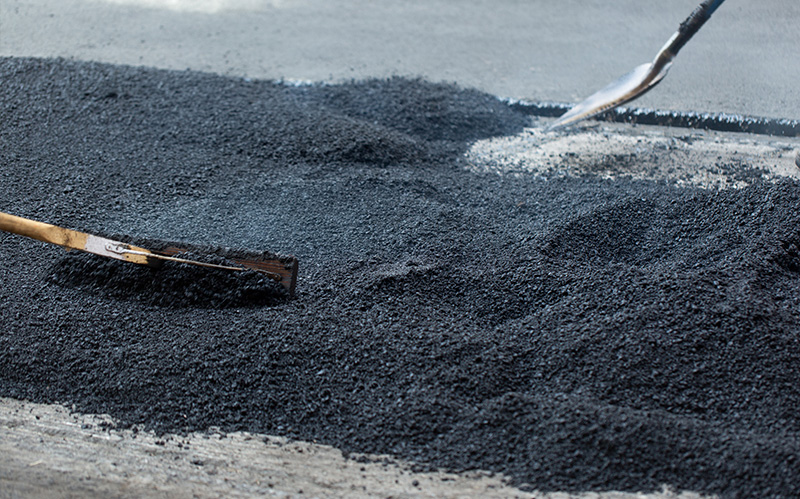
What is the Basic Structure of Road Pavement?
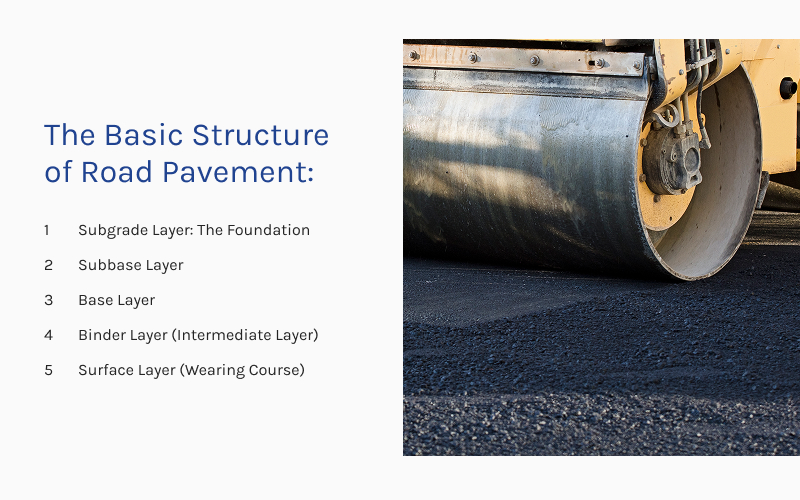
1. Subgrade Layer: The Foundation
The subgrade forms the foundation of the entire pavement structure. It consists of the natural soil or compacted fill that supports all pavement layers above it. Before construction begins, the subgrade is carefully prepared and compacted to ensure it provides a stable and uniform base.
The strength and load-bearing capacity of the subgrade play a part in determining the overall performance of the pavement. If the soil is weak or unstable, it may lead to pavement deformation, rutting, or premature failure. Even the best surface layer cannot compensate indefinitely for a poor foundation. For this reason, geotechnical assessment is a key early step in pavement projects.
In some cases, engineers reinforce weak subgrade soils using stabilisation techniques or geosynthetic materials such as geogrids or geocells. These reinforcements help improve soil strength and extend the lifespan of the pavement structure. They may also reduce the need for excessively thick upper layers, making the design more efficient while still maintaining performance.
2. Subbase Layer
The subbase layer is positioned above the subgrade and provides additional structural support for the pavement system. It is typically made from granular materials such as crushed stone or gravel. This layer helps distribute traffic loads more evenly across the pavement structure and improves drainage within the pavement system.
Effective drainage is essential because water accumulation within pavement layers can weaken the structure and accelerate pavement deterioration. When water becomes trapped in the pavement system, it can reduce the strength of granular materials and soften the subgrade, especially under repeated traffic loading.
3. Base Layer
The base layer serves as one of the main structural components of the pavement. Located above the subbase, it provides a stable platform for the upper pavement layers and plays a key role in distributing traffic loads. Base layers may consist of aggregates or stabilised materials such as a cement-treated base (CTB).
The strength and durability of the base layer significantly influence the overall performance and lifespan of the pavement. A strong base helps maintain layer integrity, limits excessive strain in the upper bituminous layers, and improves resistance to deformation. In many projects, the base is one of the most critical layers in determining how well the pavement handles repeated traffic stress over time.
4. Binder Layer (Intermediate Layer)
The binder layer is sometimes referred to as the intermediate layer. It sits between the base layer and the surface layer. This layer is made using bituminous materials with relatively coarse aggregates. This layer contributes to the structural strength of the pavement and helps distribute traffic loads more evenly to the base layers below.
Due to its structural role, the binder layer improves the pavement’s resistance to fatigue and helps prevent cracking under repeated traffic loading. It also acts as a transition between the coarser structural layers below and the finer, smoother surface layer above.
5. Surface Layer (Wearing Course)
The surface layer, also known as the wearing course, is the pavement’s topmost layer that comes into direct contact with traffic. It is typically constructed using asphalt or concrete, depending on engineering requirements. This is the layer most associated with ride quality, tyre grip, and surface protection.
The wearing course must provide several important functions, including:
- Providing a smooth and comfortable driving surface
- Offering skid resistance for vehicle safety
- Protecting the lower pavement layers from water, weather, and environmental damage
Material selection for the surface layer depends on factors such as traffic intensity, environmental conditions, maintenance considerations, and overall design requirements.
In many discussions about pavement structure layers, the surface receives the most attention because it is the visible part of the road. However, its performance is closely tied to the support it receives from the layers below.
What are the Key Factors That Influence Pavement Design?
1. Traffic Volume
Traffic volume is a key factor in pavement design. Engineers often measure traffic demand using Equivalent Standard Axle Loads (ESALs), a standard way to calculate the cumulative destructive effect of various vehicle types and weights over the pavement’s lifespan. Roads that carry heavier or more frequent traffic require thicker pavement structures and stronger materials.
2. Vehicle Weight
Heavy vehicles such as trucks exert significant loads on pavements. Repeated heavy axle loads can cause fatigue damage and structural deformation if the pavement is not designed appropriately. To accommodate these loads, engineers may increase pavement layer thicknesses or use higher-quality materials.
3. Climate Conditions
Climate conditions can significantly affect pavement performance. It directly affects how materials behave and how quickly they age. High temperatures can soften asphalt, increasing the risk of rutting. On the other hand, colder temperatures may lead to thermal cracking or frost damage. Rainfall and moisture can also weaken pavement layers if drainage is inadequate.
4. Soil Conditions
The properties of the underlying soil, including its strength, moisture content, and frost susceptibility, influence pavement design. Weak soils may require stabilisation or additional structural layers to ensure adequate support. A pavement built over highly variable or moisture-sensitive soil may experience uneven settlement or localised failure, if these conditions are not addressed early in the design stage.
5. Drainage
Poor drainage is one of the most common pavement deterioration causes in road systems. Water infiltration can weaken pavement layers and reduce structural integrity. Therefore, engineers incorporate drainage systems such as ditches, culverts, and subdrains to direct water away from the pavement structure.
6. Life-Cycle Cost Analysis
Pavement design also considers the total cost of the pavement throughout its lifespan, including construction, maintenance, rehabilitation, and potential user costs. This life-cycle approach helps engineers select pavement designs that provide the best long-term value rather than focusing solely on initial construction costs. For example, a pavement option with a higher construction cost may still be more economical if it reduces future repair frequency and lowers traffic disruption.
This analysis also determines initial thickness; pavements designed for longer service life or planned resurfacing will have different thickness requirements than those designed for immediate, short-term use.
What are the Types of Road Pavement Systems?
1. Flexible Pavement (Asphalt)
Flexible pavement is the most common pavement system used for roads and highways. It is typically constructed using asphalt layers over a base and subbase. These layers work together to distribute traffic loads progressively downward, reducing the intensity of stress before it reaches the subgrade.
Flexible pavement distributes traffic loads gradually across multiple layers, allowing it to perform efficiently under regular road use. Its flexibility also enables slight deformation without cracking, helping maintain serviceability in urban streets and highways.
Commonly used for roads, highways, and urban streets, this pavement can often be laid relatively quickly. This helps reduce disruption to road users during construction or repair.
2. Rigid Pavement (Concrete)
Rigid pavement uses concrete slabs as the main structural layer and distributes loads differently from flexible pavement. It is constructed with Portland cement concrete slabs, which provide the primary structural capacity.
High structural stiffness allows loads to spread over a wider area, making rigid pavement well-suited for applications requiring high structural stability. These include runways, container yards, and industrial traffic routes.
However, rigid pavements may require different maintenance needs, joint design considerations, and construction sequencing compared to flexible systems.
Pavement Maintenance and Road Repairs
What are the Common Road Pavement Problems?
Over time, road pavements can deteriorate due to traffic loads, environmental conditions, and material ageing. When pavement layers weaken or fail, visible surface problems may appear. Identifying these issues early helps prevent more severe structural damage and costly repairs. In practice, many major failures begin as minor defects that were either overlooked or left untreated for too long.
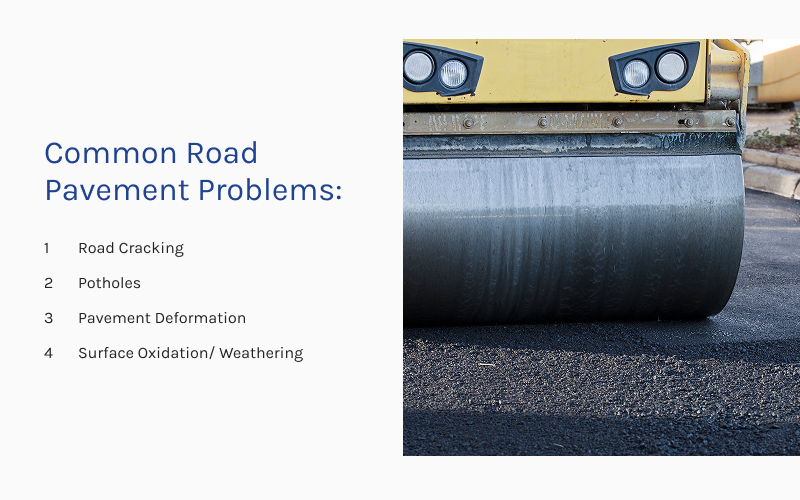
1. Road Cracking
Road cracking is one of the most common pavement distresses. Cracks develop when the pavement structure experiences repeated traffic stress, temperature changes, or weakening of the underlying layers. Understanding the causes of pavement cracking is important because different crack patterns often point to distinct underlying issues.
Common types of pavement cracks include:
- Alligator cracking: Forms a network of interconnected cracks due to structural fatigue. It indicates a loss of pavement strength and often requires more than surface repairs.
- Longitudinal cracking: Runs parallel to traffic flow and is typically linked to joint weaknesses, construction issues, or repeated wheel loading.
- Transverse cracking: Runs across the pavement and is usually caused by temperature changes or material shrinkage, often associated with ageing pavement.
2. Potholes
Potholes are small, bowl-shaped depressions that form on the pavement surface, often penetrating through the asphalt layer down to the base layer. They typically have sharp edges and steep sides around the opening. Although potholes may appear suddenly to drivers, they usually develop through a sequence of deterioration that has been building over time.
Pavement cracking allows water to infiltrate the pavement layers. Moisture weakens the underlying materials and reduces structural strength. As cracks expand, small sections of pavement begin to break apart. Passing vehicles dislodge these loose asphalt pieces, leaving a cavity in the pavement surface. The hole left by dislodged pavement is known as a pothole.
Potholes are especially hazardous because they affect ride quality, damage tyres and suspension systems, and pose safety risks to motorists and cyclists. They are also a sign that the surface has lost integrity and needs prompt attention before the surrounding area deteriorates further.
3. Pavement Deformation
Pavement deformation occurs when the pavement surface changes shape under repeated traffic loads, often due to insufficient structural strength or weakened pavement layers. One of the most recognised forms is rutting, which refers to long, shallow depressions that form along vehicle wheel paths.
If rutting becomes severe, it can affect driving safety, vehicle handling, and water drainage on the road surface. Water may collect in the depressions, increasing spray, hydroplaning risk, and maintenance concerns during wet weather.
Key characteristics of rutting include:
- Surface grooves or depressions along traffic lanes
- Repeated heavy traffic loading, especially from trucks
- Association with insufficient pavement thickness, weak base layers, or asphalt softening under high temperatures
In some cases, rutting may be confined to the asphalt layers, while in others it may indicate deeper structural problems below the surface.
4. Surface Oxidation/ Weathering
Surface oxidation occurs when asphalt is exposed to air and sunlight over time, gradually hardening and reducing its flexibility. UV radiation and oxygen break down the asphalt binder, leading to a faded, brittle road surface. The surface colour changes from deep black to grey, indicating ageing and material degradation.
As the pavement becomes more brittle, it becomes more prone to cracking under repeated traffic loads. This condition often occurs in older pavements that have undergone prolonged environmental exposure and insufficient maintenance. Preventive measures such as sealing or resurfacing can slow oxidation and extend service life.
Weathering may not seem as urgent as potholes or deep rutting, but it is an early sign of surface ageing that should be taken seriously. Left unmanaged, it can reduce the pavement’s ability to resist cracking and moisture intrusion over time.
How to Extend Road Pavement Lifespan?
Roads are exposed to continuous traffic loads, weather conditions, and environmental stress, all of which can gradually weaken the pavement structure. Extending the lifespan of road pavement requires regular maintenance, timely repairs, and proper monitoring of pavement conditions.
For property owners, facility managers, or developers seeking road repair services in Singapore, the right repair approach depends on the actual pavement condition.
1. Preventive Maintenance
Preventive maintenance focuses on identifying and addressing early signs of pavement deterioration before they develop into major structural problems. These measures help protect the pavement surface and slow down the rate of damage caused by traffic and environmental exposure.
Crack sealing is one of the most effective methods for preventing pavement deterioration. It seals cracks in the pavement surface to prevent water infiltration into the underlying layers. This reduces the risk of cracks expanding into more severe pavement distress, such as potholes or alligator cracking. Typically performed as part of routine maintenance programmes for asphalt pavements, it also helps maintain structural integrity by preventing moisture damage.
In the broader context of pavement maintenance techniques, surface treatments are useful because they extend pavement lifespan by slowing down surface deterioration. They also help protect the asphalt layer from oxidation, weather exposure, and traffic wear.
2. Routine Inspections
Regular inspections are essential for identifying pavement issues early. They allow engineers to detect cracks, deformation, and surface wear before they worsen. This enables timely maintenance interventions that prevent costly repairs and help monitor pavement performance under varying traffic and environmental conditions.
Routine inspections also provide valuable data for planning future maintenance and rehabilitation strategies. Rather than reacting only when visible failure becomes severe, road agencies and contractors can make more informed decisions based on condition trends, defect mapping, drainage observations, and traffic exposure.
3. Road Repair Techniques
When pavement damage becomes more severe, targeted repair techniques are required to restore structural performance and ensure safe road conditions.
Pothole patching is used to repair small but hazardous pavement defects. It involves removing damaged pavement material and filling the cavity with new asphalt or repair materials. This restores the road surface and prevents the pothole from expanding further.
Patching also improves road safety by eliminating uneven surfaces that may damage vehicles or create driving hazards. It is often used as a rapid repair method for localised pavement damage, particularly where defects need immediate attention.
On the other hand, asphalt resurfacing restores the surface condition of deteriorated pavements. It involves placing a new layer of asphalt over the existing pavement surface. This improves ride quality, restores skid resistance, and helps correct minor surface irregularities such as cracking or shallow rutting. Resurfacing can significantly extend the service life of the pavement without requiring full reconstruction.
Milling and overlay removes the damaged upper asphalt layer using specialised milling machines while keeping the lower pavement layers intact. A new asphalt layer is then applied, restoring the road surface and improving structural performance.
This method helps correct surface issues such as cracks, rutting, and uneven pavement. It improves ride quality and skid resistance, making roads safer for vehicles. It also extends pavement lifespan without requiring full road reconstruction. Used for roads with moderate surface deterioration and stable underlying structure, milling and overlay offers a practical solution between minor maintenance and full reconstruction.
What is the Role of Professional Road Contractors?
Professional road contractors ensure that road infrastructure is properly designed, constructed, and maintained to meet safety and performance standards. Their expertise covers pavement engineering, material production, construction works, and long-term maintenance.
In Singapore, United E&P supports both public- and private-sector infrastructure projects. We enhance road infrastructure durability through our engineering capabilities, advanced equipment, and stringent quality control processes.
1. Engineering Expertise
As a capable road contractor in Singapore, we provide technical expertise in planning and designing pavement systems. This includes pavement design and planning based on traffic conditions, soil properties, and environmental factors. It also includes the use of modern paving and stabilisation technologies to improve pavement durability. This reduces the risk of mismatches between design intent and finished pavement quality.
2. Comprehensive Services
We offer a wide range of services across the pavement delivery cycle. These include asphalt paving for roads and infrastructure projects, road repair and resurfacing to restore pavement performance, and pothole patching for both small driveway repairs and large urban road works. This breadth of capability matters because pavement performance is affected by how well different stages of work connect with one another.
3. Material Supply and Quality Control
United E&P supports clients seeking broader civil engineering services in Singapore through a single experienced delivery partner. We operate a fully automated Ammann asphalt plant with a production capacity of over 320 tons per hour. Our in-house asphalt production and mix design capabilities allow pavement materials to be tailored to specific project requirements. This improves control over consistency, availability, and performance expectations during construction.
We also carefully select crushed stone, sand, and mineral fillers based on grading and strength requirements. Strict on-site and laboratory testing is conducted throughout construction to ensure compliance with engineering standards. In addition, the adoption of sustainable construction materials and practices helps enhance pavement lifespan and reduce environmental impact.
Frequently Asked Questions
1. Why is asphalt pavement widely used for road construction?
Asphalt road pavement is widely used for its durability, flexibility, and efficient installation. It can handle heavy traffic loads and is generally easier to maintain than other pavement types. Its faster construction and repair processes also help minimise traffic disruptions, making it a practical choice for roads, highways, and access routes.
2. How long does road pavement usually last?
The lifespan of road pavement depends on factors such as traffic volume, pavement design, construction quality, and maintenance practices. With proper design and regular maintenance, pavement can provide reliable performance for many years before requiring major rehabilitation. The actual lifespan varies from one project to another because site conditions, drainage quality, axle loading, and maintenance timing all influence long-term results.
3. Why is regular pavement maintenance necessary?
Regular pavement maintenance helps prevent small defects from developing into more serious structural problems. Early maintenance activities such as crack sealing and resurfacing can significantly extend the lifespan of road pavements while maintaining road safety and driving comfort. Maintenance is also more cost-effective when performed early, as it reduces the likelihood of more extensive repairs or full reconstruction later.
Conclusion
Road pavement forms the foundation of modern transport infrastructure, supporting safe and efficient movement of people and goods. Its durability depends on well-designed pavement structures, quality materials, and skilled construction practices that allow roads to withstand heavy traffic and changing environmental conditions.
Looking ahead, pavement engineering increasingly focuses on improving efficiency, durability, and sustainability. One priority is reducing maintenance requirements, which helps lower operating costs while minimising traffic disruptions on busy road networks.
Another key goal is extending pavement lifespan through improved materials and construction methods, reducing reliance on non-renewable resources and lowering carbon emissions. Engineers are also developing more resilient pavement systems to better withstand climate impacts, such as increased storm intensity and temperature variations.
For organisations planning new roads, upgrading ageing surfaces, or improving long-term pavement performance, partnering with United E&P provides access to proven engineering expertise, dependable material supply, and practical road construction and maintenance solutions tailored to project needs.
Contact us to discuss how we can support your project with reliable and efficient pavement solutions.
Connect with us
If you have any questions or enquiries, feel free to reach out to our friendly team anytime; we’re here to assist you!
